

With the development of industry and the growth of urban populations, an increasing amount of pollutants are being discharged into the environment from production and daily life, among which organic volatile pollutants pose particularly serious threats to both the environment and human health.
What are the types of organic waste gas treatment equipment?
1. Photo-catalytic oxidation system. By fully utilizing the high-energy ultraviolet light beams from UV lamps, this system effectively breaks down odorous gases and oxidizes organic pollutants into harmless small molecular compounds under the action of photocatalysts.
2. Activated carbon adsorber. A commonly used activated carbon for treating organic exhaust gases is honeycomb carbon, which fully utilizes the large specific surface area and strong adsorption capacity of honeycomb carbon to adsorb and purify organic exhaust gases.
3. Dust removal and purification equipment. This primarily utilizes fiber filter bags to effectively separate organic pollutants from dusty exhaust gases, thereby achieving the function of purifying large particulate contaminants in the organic waste gas.
4. Catalytic combustion and incineration systems. Catalytic combustion utilizes catalysts to enable organic exhaust gases to undergo flameless oxidation reactions, converting them into CO₂ and water. Incineration systems, on the other hand, heat flammable organic exhaust gases to their combustion temperature, allowing them to burn and be purified.
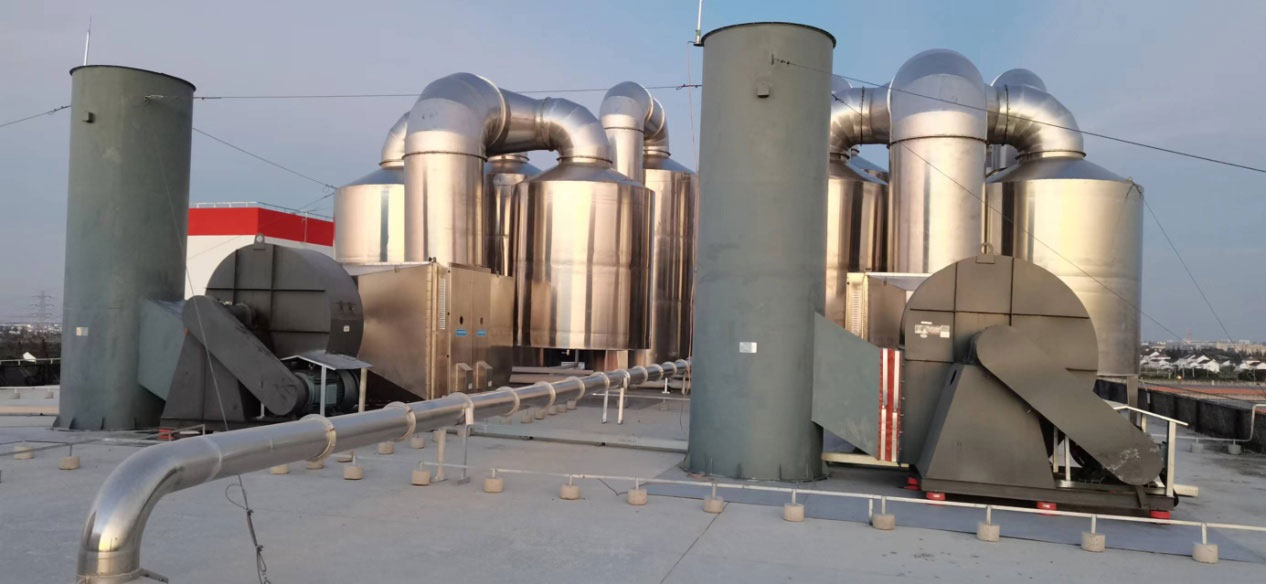
How to Choose Organic Waste Gas Treatment Equipment
Organic exhaust gas treatment equipment ensures the discharge of pollutants. The selection of treatment equipment should be properly configured to form a highly efficient, cost-effective, and low-energy consumption system. The choice of organic exhaust gas treatment equipment depends on the nature of the exhaust gas, treatment capacity, and specific requirements. There are four methods for selecting such equipment:
(1) Selection based on airflow: Airflow is one of the key factors in determining the appropriate model. If the air volume capacity of the exhaust treatment system is lower than the actual required airflow, some of the exhaust gases will be released untreated, failing to meet environmental standards. Conversely, if the treatment capacity exceeds the actual airflow, it results in significant unnecessary processing costs and increases operational expenses.
(2) Selection based on exhaust gas composition: Different types of equipment should be selected according to the composition of the exhaust gas from various components. General-purpose exhaust gas treatment units can handle common components, but specific components require specialized equipment; otherwise, it is easy to fail to meet requirements.
(3) Selection based on area: If the exhaust treatment facility has a large processing area, a high-cost-performance specification can be directly selected. If the space is limited, a smaller-sized unit should be chosen for installation.
(4) Select based on processing technology: If the company's overall process has already been determined, choose the appropriate equipment specifications accordingly.